Monogram J: A Comprehensive Evaluation of Modern Decorative Illustrations
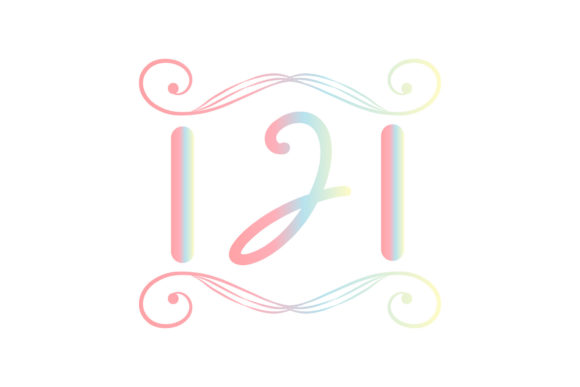
In the realm of graphic design and personal branding, few elements carry as much weight or versatility as a well-crafted monogram. The Monogram J has emerged as a distinct focal point for professionals, creatives, and individuals seeking to elevate their visual identity. Unlike generic lettering found in standard stock libraries, this specific decorative illustration is designed with a modern aesthetic that balances traditional elegance with contemporary minimalism. Whether you are developing a luxury brand, designing wedding stationery, or creating custom merchandise, understanding the nuances of this asset is crucial for making an informed decision.
The primary distinction of the Monogram J lies in its adaptability. It is not merely a static image but a flexible component available in five distinct file formats: AI, EPS, SVG, JPG, and PNG. This variety addresses the fragmented nature of modern digital workflows, where a designer might need vector precision for print production one moment and a rasterized preview for web use the next. By offering a canvas size of 1920 px by 1280 px across all formats, the design ensures high-resolution clarity regardless of the output medium. This section explores how these attributes position the Monogram J within the broader landscape of decorative assets.
Comparing File Formats and Technical Utility
When evaluating design resources, the file format often dictates the utility more than the artistic style itself. The availability of the Monogram J in both vector (AI, EPS, SVG) and raster (JPG, PNG) formats provides a significant advantage over single-format competitors. Vector files, specifically AI and EPS, are essential for scalability. If your project involves large-scale printing, such as banners or signage, the ability to scale the Monogram J without losing resolution is non-negotiable. These formats allow for the editing of individual paths, meaning you can alter the stroke width, color, or even the geometry of the letter "J" to fit a specific brand guideline.
In contrast, the SVG format offers a unique bridge between print and web development. For digital interfaces, the Monogram J in SVG allows for crisp rendering on high-DPI screens while maintaining a small file size, which is critical for website performance. Conversely, the JPG and PNG options serve as immediate solutions for quick mockups or social media graphics where vector editing software is unavailable. While JPGs are compressed and may lose some edge definition, they are universally compatible. PNGs, however, preserve transparency, allowing the Monogram J to sit cleanly over any background texture or pattern. This multi-format approach eliminates the need for users to purchase separate assets for different stages of a project.
Tradeoffs Between Editability and Accessibility
While the comprehensive format selection is a strength, it introduces a tradeoff regarding technical accessibility. Working with AI and EPS files requires professional software like Adobe Illustrator. Users who rely solely on free online editors or basic photo manipulation tools may find themselves limited when using the editable versions. In these scenarios, the JPG or PNG versions become the only viable option, sacrificing the ability to edit the underlying shapes. However, for the majority of professional designers, the requirement to own specific software is a negligible barrier compared to the flexibility gained. The decision ultimately rests on whether the user prioritizes the final visual output or the creative control during the production phase.
Evaluating Design Style and Versatility
The aesthetic of the Monogram J is defined by its modern interpretation of classic typography. Traditional monograms often feature heavy serifs and intricate flourishes that can feel dated in current digital contexts. This illustration avoids those pitfalls by utilizing clean lines and balanced negative space. The 1920 x 1280 pixel canvas provides ample room for the design to breathe, ensuring it does not appear cramped when scaled down or overwhelming when enlarged.
Compared to other decorative illustrations, the Monogram J stands out due to its neutrality. Many monogram designs lean heavily into specific themes, such as Victorian romance or Art Deco glamour, which limits their application. The modern style of this particular asset makes it suitable for a wide array of industries, from tech startups to boutique hospitality. Its geometric underpinnings allow it to pair effectively with sans-serif fonts, while its organic curves can soften the look of bold, blocky layouts. This chameleon-like quality reduces the risk of the design clashing with existing brand elements, a common issue when selecting pre-made assets.
Contextual Application and Limitations
Despite its versatility, the Monogram J is not a universal solution for every design challenge. For projects requiring highly ornate, hand-drawn textures or watercolor effects, this illustration may appear too rigid. The clean, vector-based construction is excellent for corporate identities and minimalist branding but might lack the warmth required for artisanal product packaging that relies on a handmade feel. Additionally, the fixed aspect ratio of the canvas means that while the resolution is high, the composition is optimized for landscape orientations. Users attempting to use this asset for vertical applications, such as mobile app icons or Instagram stories, will need to crop or reposition the design, potentially losing the intended balance of the original composition.
Decision Factors for Professional Selection
Selecting the right design resource involves weighing cost against value, time efficiency, and long-term usability. The Monogram J presents a strong case for investment when the goal is a cohesive, scalable brand identity. The inclusion of editable source files (AI/EPS) means that the initial purchase covers multiple iterations of the design. If a client requests a color change or a slight modification to the letterform later in the project lifecycle, the user can simply open the source file rather than searching for a new asset or hiring a freelancer to redraw the element. This capability significantly reduces the total cost of ownership compared to buying multiple variations of a similar design separately.
However, for users with very short-term needs, such as a one-time event flyer or a temporary promotional post, the full suite of formats might be overkill. In these cases, a simpler, lower-cost option might suffice. The decision to choose the Monogram J should be driven by the expectation of future edits and the necessity for high-quality reproduction. If the project is destined for print media, the vector capabilities are paramount. If the project is purely digital, the SVG and PNG options provide sufficient quality without the overhead of complex editing.
Practical Considerations for Implementation
Implementing the Monogram J into a workflow requires attention to detail regarding layer management and color profiles. When working with the AI or EPS files, it is advisable to outline text or convert strokes to filled shapes before exporting to ensure compatibility across different systems. This step prevents font substitution issues that can alter the appearance of the design. Furthermore, the 1920 x 1280 resolution is ideal for desktop displays and standard HD monitors, but for 4K outputs, the vector nature of the AI and EPS files becomes even more critical to maintain sharpness.
For those unfamiliar with vector editing, the learning curve associated with AI and EPS files can be steep. In such instances, relying on the provided PNG or JPG files is a pragmatic choice. These formats offer a "plug-and-play" experience where the design can be dragged and dropped into presentation software or web builders. While this sacrifices the ability to manipulate the shape, it maximizes speed and ease of use. The key is to match the file format to the skill level of the team member executing the design task.
Long-Term Viability and Brand Consistency
A critical factor in choosing a monogram is its longevity. Trends in graphic design shift rapidly, and assets that are too trendy can date a brand quickly. The modern yet timeless approach of the Monogram J mitigates this risk. By avoiding overly specific stylistic markers, the design remains relevant for years. This makes it a safer bet for businesses planning long-term growth. When comparing this asset to others, consider the lifespan of the brand you are building. An asset that adapts to changing trends, rather than chasing them, offers better value over time.
Ultimately, the choice to utilize the Monogram J depends on the specific requirements of the project at hand. It excels in scenarios demanding high resolution, editability, and a modern aesthetic. While it may not be the perfect fit for every single niche—particularly those requiring extreme ornamentation or specific cultural motifs—it represents a robust, professional-grade tool for general design purposes. By understanding the strengths of its various formats and the implications of its modern style, users can determine if this asset aligns with their strategic goals.
As you evaluate your options, remember that the best design resource is one that integrates seamlessly into your existing workflow. The Monogram J offers the flexibility to do just that, providing a solid foundation upon which to build a distinctive visual identity. Whether you are leveraging the precision of vector files or the convenience of raster images, the core value lies in the design's ability to remain clear, editable, and stylish across all mediums.